

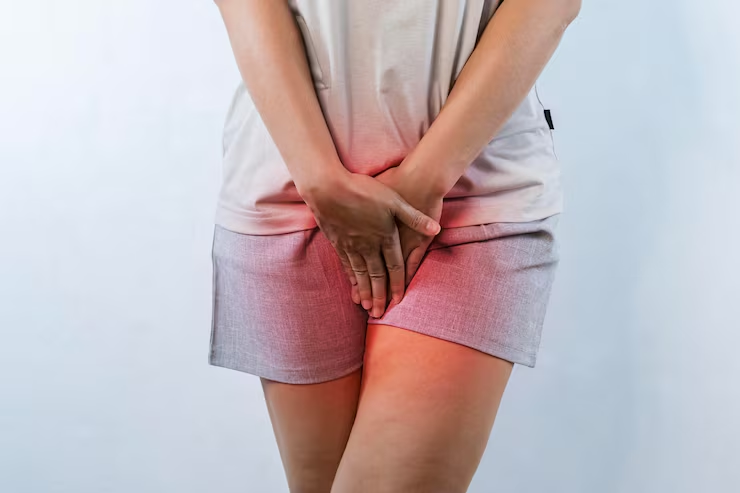
Vaginal itching is a common concern that can range from mild and temporary irritation to a symptom of an infection or skin condition. While many people use the term “vaginal itching,” the itching may actually affect the vulva, the external area around the vaginal opening.
Understanding the possible vaginal itching causes can help you recognize when simple changes in your hygiene routine may help and when it is important to speak with a healthcare professional. Common causes include yeast infections, bacterial vaginosis, sexually transmitted infections (STIs), irritation from personal care products, hormonal changes, and certain skin conditions.
This guide explains the common causes of vaginal itching, accompanying symptoms, prevention tips, and when to seek medical advice.
Important: Vaginal itching can have many different causes. Symptoms alone may not be enough to identify the problem, so persistent or severe symptoms should be evaluated by a qualified healthcare professional.
(Also Read: Pelvic Inflammatory Disease | Risk | Treatment)
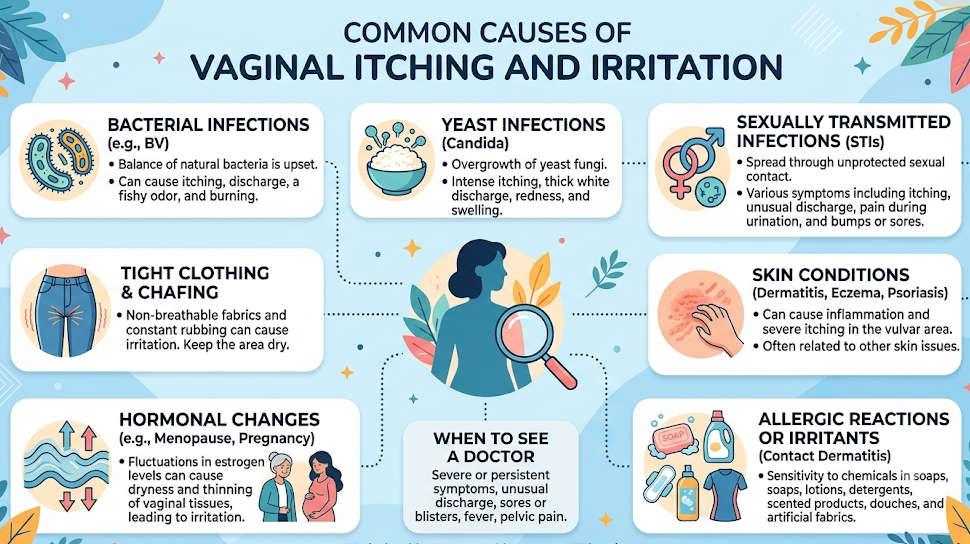
Table of Contents
What Causes Vaginal Itching?
Vaginal or vulvar itching can occur when the delicate skin and tissues in the genital area become irritated or inflamed. Infections are a common reason, but they are not the only cause.
The symptoms that occur along with itching—such as discharge, odor, burning, redness, or pain—can provide useful clues. However, proper testing may be needed to determine the exact cause. The CDC notes that history alone may not accurately diagnose vaginal symptoms, and examination or laboratory testing can help identify the underlying cause.
1. Vaginal Yeast Infection
A vaginal yeast infection, also called vaginal candidiasis, is one of the most common causes of vaginal and vulvar itching. It occurs when yeast, usually Candida, grows excessively.
Yeast can normally be present in the vagina without causing problems. However, changes in the natural balance of microorganisms can allow yeast to overgrow.
Common symptoms of a yeast infection include:
- Intense itching
- Burning or irritation
- Redness and swelling around the vulva
- Discomfort during urination or sex
- Thick, white, lumpy discharge in some cases
Antibiotic use, pregnancy, diabetes, and conditions that affect the immune system can increase the risk of yeast infections.
Because other conditions can cause similar symptoms, it is best not to assume that every episode of itching is a yeast infection.
2. Bacterial Vaginosis (BV)
Bacterial vaginosis, commonly called BV, develops when the normal balance of bacteria in the vagina changes.
BV may cause:
- Vaginal irritation or itching
- Increased vaginal discharge
- A strong or fishy odor
- Changes in the appearance of discharge
Some people with BV may have few or no symptoms. Because the symptoms of BV can overlap with other vaginal conditions, proper diagnosis is important.
(Also Read: Keep Your Intimate Area Hygienic With V Wash)
3. Sexually Transmitted Infections (STIs)
Certain sexually transmitted infections can cause vaginal or vulvar itching and irritation.
Trichomoniasis, for example, may cause itching, redness, swelling, and changes in vaginal discharge. Other infections, including chlamydia and gonorrhea, can also cause genital symptoms or unusual discharge.
Symptoms vary from person to person, and some STIs may not cause noticeable symptoms at all. If itching occurs along with unusual discharge, genital sores, pelvic discomfort, or other concerning symptoms, medical testing may be necessary.
4. Irritation From Soaps and Feminine Hygiene Products
Not all vaginal itching is caused by an infection. The skin around the vulva can be sensitive to products that contain fragrances or harsh ingredients.
Potential irritants include:
- Scented soaps
- Feminine sprays
- Perfumed pads or tampons
- Bubble baths
- Laundry detergents and fabric softeners
- Certain creams or wipes
- Vaginal deodorants
These products can trigger contact dermatitis, which may cause itching, burning, stinging, redness, or raw skin. ACOG identifies soaps, fabrics, and perfumes as common sources of vulvar irritation.
For everyday care, choose gentle, fragrance-free products and avoid unnecessary products inside the vagina.
(Also Read: How To Use Period Panty?)
5. Allergic Reactions
An allergic reaction to a product that comes into contact with the genital area can also cause itching.
Possible triggers include:
- Latex products
- Spermicides
- Lubricants
- Fragranced personal care products
- Laundry products
If itching begins after using a new product, consider stopping the product and speaking with a healthcare professional if symptoms continue or become severe.
6. Hormonal Changes and Vaginal Dryness
Hormonal changes can affect vaginal and vulvar health. Estrogen plays an important role in keeping vaginal tissues healthy and supporting the natural environment of the vagina.
Lower estrogen levels, particularly around menopause, can contribute to dryness, irritation, and itching. Vaginal discomfort may also occur during other periods of hormonal change.
If vaginal dryness or itching is persistent, a healthcare professional can help identify the cause and recommend appropriate treatment.
(Also Read: Home Remedies For Itchy Vagina Advantages)
7. Skin Conditions
Some skin conditions can affect the vulva and cause persistent itching, irritation, or changes in the skin.
These conditions may include:
- Eczema
- Contact dermatitis
- Lichen sclerosus
- Lichen planus
- Lichen simplex chronicus
Skin disorders may require a different approach from treating an infection. If you notice white patches, thickened skin, persistent rashes, cracks, or other visible changes, seek medical advice.
8. Tight Clothing and Excess Moisture
Tight clothing and non-breathable fabrics can trap heat and moisture around the genital area. Damp clothing, sweaty workout clothes, or wet swimwear may also contribute to irritation.
To reduce irritation:
- Change out of wet clothes promptly.
- Avoid staying in sweaty clothing for long periods.
- Choose comfortable, breathable underwear.
- Avoid excessively tight clothing when it causes discomfort.
These simple habits can support comfort and help reduce unnecessary irritation.
(Also Read: Essential Sexual Hygiene Tips For Women After Sex)
9. Shaving, Waxing, and Friction
Hair removal and friction can irritate the sensitive skin of the vulva. Shaving or waxing may cause redness, itching, or small bumps.
Friction from activities, tight clothing, or prolonged moisture can also irritate the skin. ACOG notes that folliculitis can occur after shaving, waxing, or friction.
Use gentle hair-removal practices and avoid scratching irritated skin, as scratching can worsen inflammation.
10. Poorly Tolerated Hygiene Practices
Good intimate hygiene does not mean using many products. In fact, over-cleaning or using harsh products can disrupt the natural environment of the genital area.
Avoid:
- Douching
- Vaginal deodorants
- Strongly fragranced products
- Harsh scrubbing
- Unnecessary cleansing products inside the vagina
The vagina is self-cleaning, and douching can remove protective bacteria. Gentle external care is generally more appropriate than aggressive cleansing.
For more practical everyday guidance, read our guide on daily hygiene routine for women.
(Also Read: What Is Your Vaginal Discharge Saying About Your Health?)

Vaginal Itching Symptoms to Watch For
Vaginal itching can occur by itself or alongside other symptoms. Pay attention to changes such as:
- Unusual vaginal discharge
- A strong or unpleasant odor
- Burning during urination
- Pain during sex
- Redness or swelling
- Cracked or irritated skin
- Sores or blisters
- Vaginal dryness
- Light bleeding or spotting
A change in the color, smell, amount, or consistency of discharge may indicate that something is different from your usual vaginal health pattern.
How Is the Cause of Vaginal Itching Diagnosed?
Because several conditions can cause similar symptoms, self-diagnosis is not always reliable.
A healthcare professional may:
- Ask about your symptoms and medical history.
- Ask about hygiene products or medications you use.
- Perform an examination when appropriate.
- Take a sample of vaginal discharge for testing.
- Recommend additional tests if an STI or another condition is suspected.
Testing is particularly important when symptoms are new, persistent, severe, or keep returning.
(Also Read: Menstruation And Hygiene! How To Maintain)

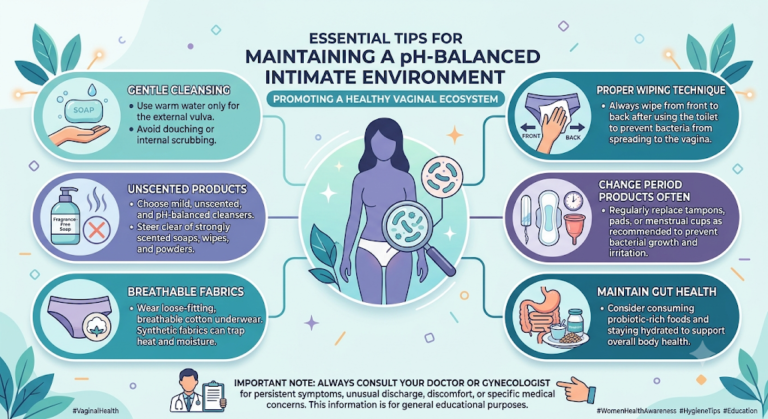
How to Prevent Vaginal Itching
Not every cause of vaginal itching can be prevented, but healthy habits may reduce the risk of irritation and some infections.
Choose Fragrance-Free Products
Avoid heavily scented soaps, sprays, wipes, and other products around the genital area.
Avoid Douching
Douching can interfere with the natural balance of bacteria in the vagina and may worsen irritation.
Keep the Area Clean and Dry
Gentle external cleansing and careful drying can help reduce discomfort caused by sweat and excess moisture.
Wear Comfortable, Breathable Clothing
Choose underwear and clothing that allow air to circulate and avoid prolonged exposure to damp clothes.
Change Menstrual Products Regularly
Follow product instructions and maintain good menstrual hygiene to stay comfortable and reduce prolonged exposure to moisture.
Practice Safer Sex
Using appropriate protection and getting tested when recommended can help reduce the risk of sexually transmitted infections.
Avoid Scratching
Scratching may temporarily relieve itching but can damage sensitive skin and make irritation worse.
(Also Read: Know The Symptoms Of STD In Women)
What Not to Do When You Have Vaginal Itching
When you experience itching, avoid treatments that may make the problem worse.
Do not:
- Use harsh soaps or perfumes.
- Douche or use vaginal deodorants.
- Assume every episode is a yeast infection.
- Repeatedly use over-the-counter treatments without knowing the cause.
- Ignore persistent or worsening symptoms.
- Scratch irritated skin aggressively.
Even if you have experienced a yeast infection before, similar symptoms can be caused by a different condition. ACOG advises seeking professional guidance when symptoms are new or do not improve with treatment.
When Should You See a Doctor for Vaginal Itching?
Contact a healthcare professional if:
- Itching is severe or persistent.
- Symptoms keep returning.
- You have unusual or foul-smelling discharge.
- You experience pain while urinating or during sex.
- You notice sores, blisters, or significant skin changes.
- You have unusual bleeding.
- Over-the-counter treatment does not improve your symptoms.
- You are unsure about the cause of your symptoms.
Persistent itching should not be ignored, particularly when accompanied by visible skin changes or other symptoms.
Final Thoughts:
Vaginal itching can have many causes, ranging from temporary irritation to infections and chronic skin conditions. Because symptoms can overlap, identifying the exact cause is important before choosing treatment.
The best approach is to avoid harsh hygiene practices, pay attention to changes in your usual symptoms, and seek professional advice when itching is persistent or accompanied by unusual discharge, pain, odor, or skin changes. A gentle, informed approach to intimate hygiene can help protect the natural balance and comfort of the genital area.
FAQs:
Q. What is the most common cause of vaginal itching?
A. Vaginal or vulvar itching can be caused by several conditions. Common causes include yeast infections, bacterial vaginosis, irritation from personal care products, sexually transmitted infections, hormonal changes, and skin conditions.
Q. Can stress cause vaginal itching?
A. Stress may affect the body in different ways, but persistent vaginal itching should not automatically be attributed to stress. It is important to consider infections, irritation, skin conditions, and other possible causes.
Q. Can soap cause vaginal itching?
A. Yes. Scented or harsh soaps can irritate the sensitive skin around the vulva and may cause itching, burning, or redness. Fragrance-free products are generally a gentler choice.
Q. Does vaginal itching always mean a yeast infection?
A. No. Although yeast infections are a common cause, vaginal itching can also result from bacterial vaginosis, STIs, allergies, skin conditions, hormonal changes, and product irritation.
Q. Why does vaginal itching happen without discharge?
A. Itching can occur without noticeable discharge when the cause is skin irritation, an allergic reaction, dryness, or certain skin conditions. Some infections may also present differently from person to person.
Q. Can tight clothing cause vaginal itching?
A. Tight or non-breathable clothing can trap heat and moisture and may contribute to irritation or discomfort in the genital area.
Q. How can I stop vaginal itching at home?
A. Avoid harsh products, douching, fragrances, and scratching. Keep the external genital area clean and dry. However, if itching is persistent, severe, or accompanied by unusual discharge or other symptoms, seek medical advice rather than relying solely on home treatment.
Q. When should I worry about vaginal itching?
A. You should seek medical advice if itching is severe, persistent, recurrent, or accompanied by unusual discharge, odor, pain, sores, blisters, bleeding, or significant changes in the skin.

You May Also Like

First Period Hygiene Guide: ...
15 September 2026
Vaginal Hygiene Do’s a ...
30 August 2026

Daily Hygiene Routine for Wo ...
15 August 2026
About Us

Hygiene means the way to stay healthy. It is not only important for physical but also mental health, because it directly affects your mind and brain.
Popular Post


Daily Hygiene Routine for Women: Complete Guide
15 August 2026
Leave a Comment