

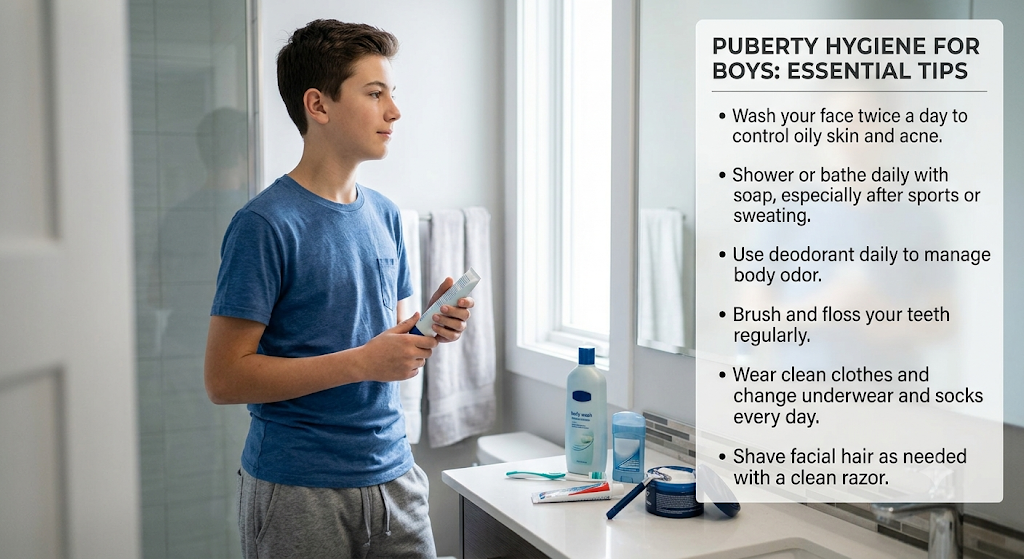
Puberty hygiene for boys does not have to be complicated. A simple daily routine that includes bathing, caring for the genital area, brushing teeth, wearing clean clothes, and managing sweat can make a big difference.
This guide explains the essential hygiene habits boys should follow during puberty, why personal care becomes more important during this stage, and when it may be helpful to speak with a parent, trusted adult, or healthcare professional.
Note: Puberty happens at a different pace for everyone. The information in this article is for general education and does not replace individual medical advice.
Table of Contents
Why Is Hygiene Important During Puberty for Boys?
During puberty, hormonal changes can make sweat glands more active and increase oil production in the skin. As a result, boys may notice stronger body odor, oily hair, or acne. These changes are a normal part of growing up.
Good personal hygiene helps remove sweat, excess oil, and dirt from the body. It can also help boys feel more comfortable and confident as their bodies change.
Developing a regular hygiene routine during puberty can also encourage healthy habits that continue into adulthood.
Common Body Changes During Puberty
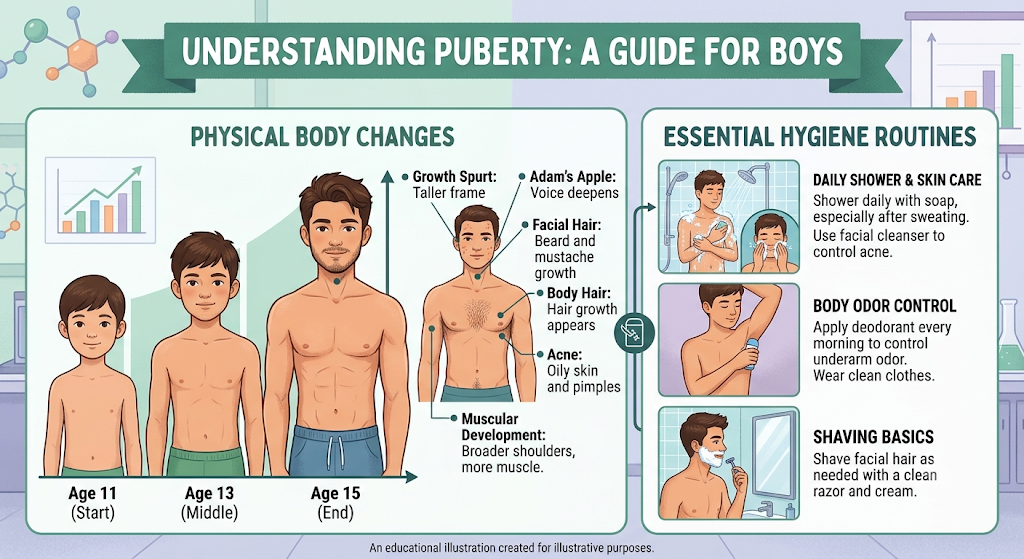
Every boy experiences puberty differently, but some common changes include:
- Increased sweating
- Stronger body odor
- Oily skin and hair
- Acne or pimples
- Growth of underarm, facial, and pubic hair
- Changes in the size of the genitals
- Voice changes
- Growth spurts
- Wet dreams and spontaneous erections
These changes are generally a normal part of development. Good hygiene can help boys manage the everyday effects of increased sweat, oil, and body hair.
(Also Read: 6 Sex Disease Of Men You Should Aware Of)
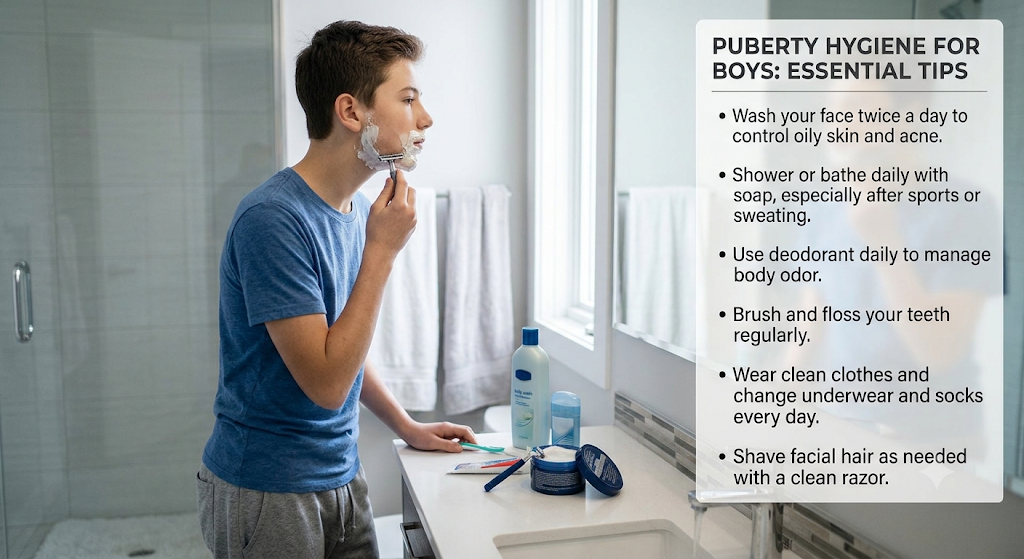
Essential Puberty Hygiene Tips for Boys:
Puberty is an important stage of growing up, bringing many physical and emotional changes. For boys, these changes can include increased sweating, stronger body odor, oily skin, acne, body hair, and changes in the genital area. Learning good hygiene habits during this time can help boys feel clean, comfortable, healthy, and confident. See below the Puberty Hygiene for Boys.
1. Shower or Bathe Regularly:
Regular bathing is one of the most important parts of puberty hygiene for boys. During puberty, boys may sweat more, especially after sports, exercise, or spending time outdoors.
A regular shower helps remove:
- Sweat
- Dirt
- Excess oil
- Odor-causing bacteria
Pay particular attention to areas that tend to sweat more, including the underarms, feet, and genital area. After physical activity, changing out of sweaty clothes can also help maintain comfort and reduce body odor.
Use a gentle cleanser on the external skin and rinse thoroughly.
2. Take Care of Underarm Hygiene:
Body odor often becomes more noticeable during puberty because certain sweat glands become more active. Odor develops when sweat and oils interact with bacteria on the skin.
To manage underarm odor:
- Wash the underarms during regular bathing.
- Dry the area after showering.
- Wear clean clothes.
- Consider using a deodorant or antiperspirant as directed.
It is normal for body odor to change during puberty. A simple daily hygiene routine is usually enough to help manage it.
3. Keep the Genital Area Clean:
Genital hygiene is an important but sometimes overlooked part of personal care for boys.
During regular bathing, gently wash the external genital area and rinse thoroughly. Wearing clean, breathable underwear and changing it every day can also help keep the area comfortable.
For boys who are uncircumcised, guidance from children’s health services commonly recommends gently cleaning beneath the foreskin during bathing and rinsing before returning the foreskin to its usual position. This should be done gently and without forcing the foreskin back.
If there is pain, swelling, persistent itching, unusual discharge, or another concerning symptom, speak with a healthcare professional.
4. Change Underwear and Clothes Daily:
Sweat and natural body oils can collect on clothing, particularly underwear and socks. Wearing clean clothes is an important part of feeling fresh and reducing unwanted odor.
A simple routine includes:
- Wearing clean underwear every day
- Changing socks daily
- Putting on fresh clothes after heavy sweating or sports
- Washing gym clothes regularly
Clean clothing is especially helpful after physical activity because odor can remain in fabrics.
(Also Read: Tips On How To Remove Pubic Hair Men)
5. Manage Oily Skin and Acne:
Hormonal changes during puberty can increase oil production in the skin. Extra oil can contribute to clogged pores and acne.
A simple skincare routine may include:
- Washing the face gently each day.
- Using a mild cleanser suitable for your skin.
- Avoiding harsh scrubbing.
- Avoiding picking or squeezing pimples.
Squeezing or scratching acne can irritate the skin and may increase the risk of scarring. If acne is severe, painful, or affecting confidence, a doctor or dermatologist can provide advice.
6. Keep Hair Clean:
Puberty can make the scalp produce more oil, which may cause hair to look greasy more quickly.
The right hair-washing routine varies from person to person. Some boys may need to wash their hair more frequently than others, depending on their hair type, scalp oiliness, and physical activity level.
Use a suitable shampoo and keep combs, brushes, and towels clean. Avoid sharing personal grooming items when possible.
7. Brush Teeth Twice a Day:
Oral hygiene is an essential part of overall personal hygiene. Brushing teeth regularly helps maintain oral health and fresh breath.
A healthy routine includes:
- Brushing teeth twice daily
- Cleaning between teeth as recommended by a dental professional
- Visiting a dentist for regular check-ups
Good dental habits are just as important during puberty as body and skincare habits.
8. Keep Hands and Nails Clean:
Hands come into contact with many surfaces throughout the day. Washing hands regularly can help remove dirt and germs.
Important times to wash hands include:
- Before eating
- After using the toilet
- After playing sports or outdoor activities
- After coughing, sneezing, or blowing your nose
Keep fingernails reasonably clean and trimmed. Dirt can collect underneath long nails, so regular handwashing and nail care are helpful hygiene habits.
9. Take Care of Foot Hygiene:
Feet can sweat, especially when wearing shoes for long periods. Sweat and bacteria can contribute to foot odor.
To maintain good foot hygiene:
- Wash your feet during bathing.
- Dry them thoroughly, including between the toes.
- Wear clean socks.
- Allow shoes to air out when possible.
If persistent itching, peeling skin, or another foot problem develops, speak with a healthcare professional.
10. Learn About Wet Dreams and Normal Body Changes:
Puberty can sometimes feel confusing because the body begins to experience new changes.
Wet dreams, also called nocturnal emissions, are involuntary ejaculations that can happen during sleep. They are a normal part of puberty and do not mean that a boy has done anything wrong.
If a wet dream occurs, changing into clean underwear or clothing and washing as part of a normal hygiene routine is usually all that is needed.
Boys may also experience spontaneous erections during puberty. These are normal physical changes associated with development.
(Also Read: Causes Of Smelly Penis And Tips To Recover From It)
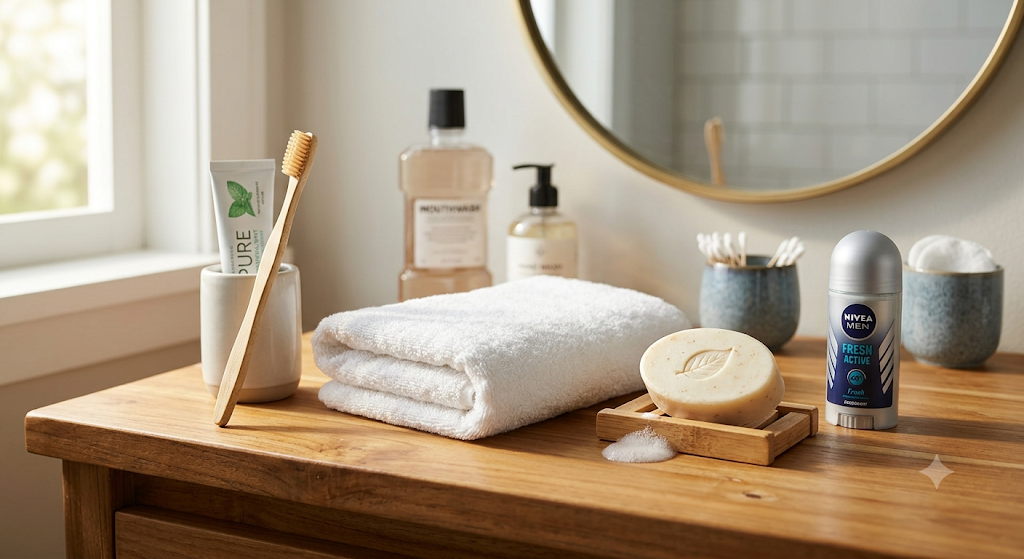
A Simple Daily Puberty Hygiene Routine for Boys
Creating a routine makes personal hygiene easier to remember.
| Time | Hygiene habit |
|---|---|
| Morning | Wash or shower as needed, and clean the underarms and body |
| Morning | Brush teeth and wash the face |
| Before school | Put on clean underwear, socks, and clothes |
| During the day | Wash hands when needed |
| After sports | Change out of sweaty clothing and shower if possible |
| Evening | Clean the body and face as needed |
| Before bed | Brush teeth and change into clean sleepwear when necessary |
The routine can be adjusted based on sports, weather, skin type, and individual needs.
Hygiene Mistakes Boys Should Avoid During Puberty
Good hygiene does not mean using many products or washing excessively. In fact, some habits can irritate the skin.
Using Too Much Fragrance
Strongly scented sprays or products may irritate sensitive skin. Cleanliness should be the priority rather than simply covering body odor with fragrance.
Skipping a Shower After Heavy Sweating
After sports or intense exercise, sweat can remain on the skin and clothing. Washing and changing into clean clothes can help improve comfort.
Wearing Dirty Underwear or Socks
Clean underwear and socks are a basic part of a healthy daily hygiene routine.
Sharing Personal Grooming Items
Razors, toothbrushes, towels, and similar personal items are best kept for individual use. Razors, in particular, should not be shared.
Picking Acne
Picking or squeezing pimples can irritate the skin and may make acne worse. Gentle skincare is usually a better approach.
Healthy Habits That Support Good Hygiene
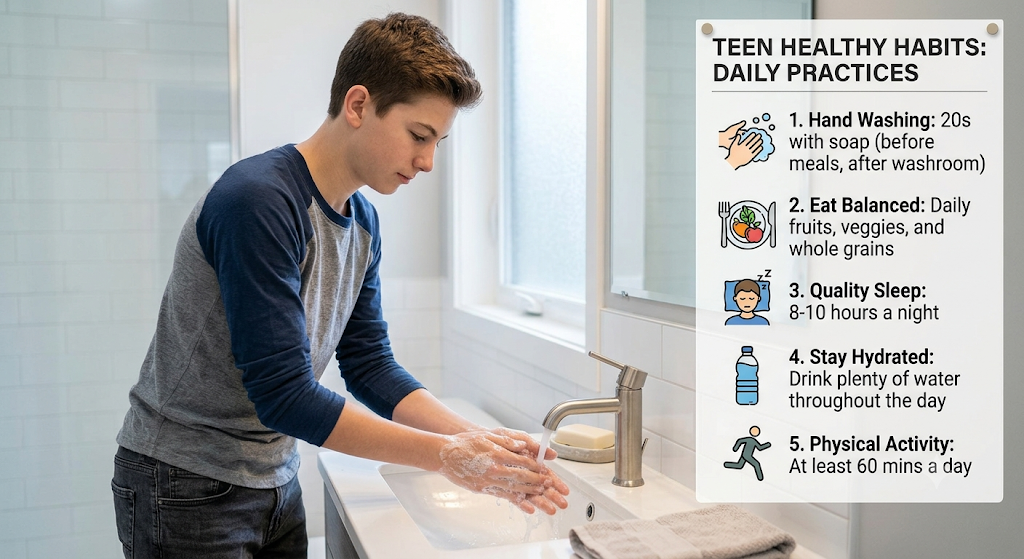
Personal hygiene is one part of overall health. Boys can also support their well-being during puberty by:
- Eating a balanced diet
- Drinking enough fluids
- Staying physically active
- Getting enough sleep
- Managing stress
- Talking to a trusted adult when they have questions
Puberty can bring emotional changes as well as physical ones. It is normal to have questions or feel self-conscious about a changing body. Talking openly with a parent, caregiver, school health professional, or doctor can make this stage easier to understand.
(Also Read: Some Harmful Effects Of Masturbation For Men)
When Should Boys See a Doctor?
Most changes during puberty are normal. However, it is a good idea to seek advice from a healthcare professional if there is:
- Persistent or severe skin irritation
- Pain, swelling, or unusual discharge from the genital area
- Severe or painful acne
- Persistent itching or a rash
- A sudden or concerning change in health
- Questions or worries about physical development
A doctor can provide guidance based on the individual’s age, symptoms, and stage of development.
Final Thoughts:
Learning good puberty hygiene for boys is an important part of growing up. Increased sweating, body odor, oily skin, acne, and body hair are common changes during puberty, and they can usually be managed with simple, consistent personal care habits.
Regular bathing, clean clothes and underwear, gentle genital hygiene, oral care, and proper skincare can help boys feel comfortable and confident. Most importantly, puberty is different for everyone. Asking questions and seeking help from a trusted adult or healthcare professional is always okay when something feels confusing or concerning.
(Also Read: Does Physical Intimacy Every Day Reduce Sperm Count?)
FAQs:
Q. How often should boys shower during puberty?
A. Many boys benefit from regular bathing during puberty, especially when increased sweating or physical activity is part of their day. Showering after sports or heavy sweating can also help maintain comfort and manage body odor.
Q. Why does body odor become stronger during puberty?
A. During puberty, certain sweat glands become more active. When sweat and oils interact with bacteria on the skin, body odor can become more noticeable.
Q. Should boys use deodorant during puberty?
A. Deodorant or antiperspirant can help manage body odor and sweat. Choose and use products according to their instructions, and stop using a product if it causes skin irritation.
Q. How should an uncircumcised boy clean under the foreskin?
A. During bathing, the foreskin should only be moved back gently as far as it comfortably goes. Never force it. Rinse the area and return the foreskin to its usual position afterward. If there is pain or another concern, seek advice from a healthcare professional.
Q. Are wet dreams normal during puberty?
A. Yes. Wet dreams are involuntary ejaculations that can occur during sleep and are a normal part of puberty for many boys.
Q. How can boys prevent foot odor?
A. Wash and dry feet regularly, wear clean socks, and allow shoes to air out. Persistent itching or skin changes should be discussed with a healthcare professional.
Q. Can puberty cause acne and oily skin?
A. Yes. Hormonal changes during puberty can increase oil production in the skin, which can contribute to oily skin and acne. Gentle skincare can help, and severe acne may require professional advice.
Q. What is the most important hygiene habit for teenage boys?
A. There is no single habit that covers everything. A good routine includes regular bathing, genital hygiene, clean underwear and clothes, oral care, handwashing, and appropriate skincare.

You May Also Like

Does Physical Intimacy Every ...
30 December 2024

Some Harmful Effects Of Mast ...
15 January 2024

6 Sex Disease Of Men You Sho ...
23 February 2021
About Us

Hygiene means the way to stay healthy. It is not only important for physical but also mental health, because it directly affects your mind and brain.
Popular Post


Daily Hygiene Routine for Women: Complete Guide
15 August 2026
Leave a Comment