

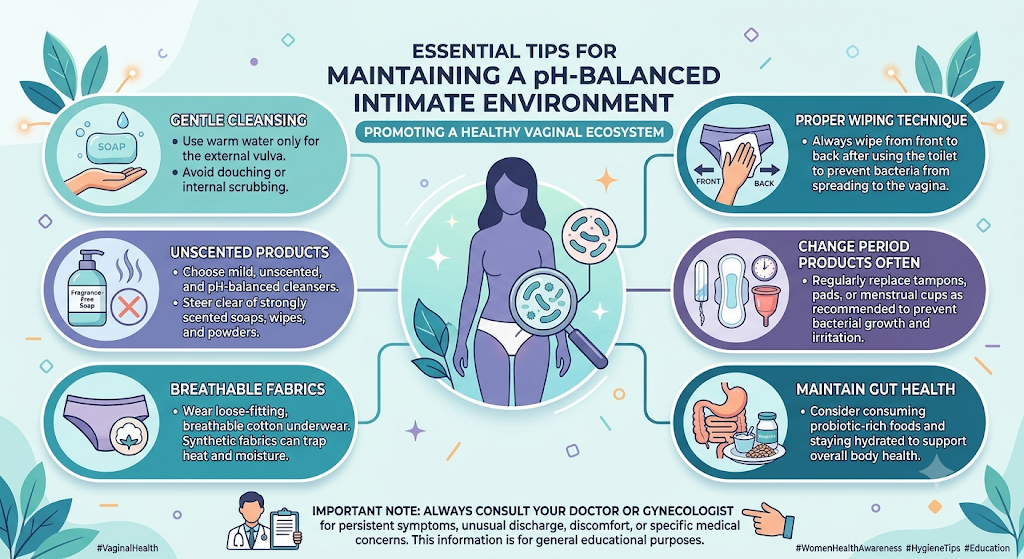
Maintaining good intimate hygiene is an important part of overall health and comfort. However, vaginal hygiene is often misunderstood. Many people believe that using scented washes, sprays, or frequent cleansing is necessary to stay clean. In reality, the vagina has its own natural cleaning system, and excessive or harsh cleaning can sometimes cause irritation or disrupt its natural balance.
Learning the right vaginal hygiene do’s and don’ts can help you care for the vaginal and vulvar area more gently. Simple habits such as avoiding douching, choosing fragrance-free products, keeping the area dry, and practicing good menstrual hygiene can support everyday comfort.
This guide explains what you should and should not do to maintain healthy vaginal hygiene, along with common mistakes to avoid.
Important: This article provides general hygiene information and is not a substitute for medical advice. If you have persistent itching, unusual discharge, pain, sores, or a strong change in odor, consult a qualified healthcare professional.
Table of Contents
Understanding the Difference Between the Vagina and the Vulva
Before discussing vaginal hygiene, it is helpful to understand the difference between the vagina and the vulva.
The vagina is the internal muscular canal, while the vulva refers to the external genital area, including the labia and the area around the vaginal opening.
The vagina naturally produces discharge that helps remove dead cells and supports its normal environment. This is why internal cleansing or douching is generally unnecessary. The external vulvar area, however, may be gently cleaned as part of a regular bathing routine.
(Also Read: Know The Symptoms Of STD In Women)

Vaginal Hygiene Do’s
1. Do Clean the External Genital Area Gently
One of the most important vaginal hygiene tips is to clean the external genital area gently. The vulva can be rinsed with water during bathing.
Avoid vigorous scrubbing because the skin in this area can be sensitive. After washing, gently pat the area dry rather than rubbing it aggressively.
The vagina itself does not require internal washing. Its natural secretions help maintain a healthy environment.
2. Do Choose Fragrance-Free Products
If you use personal care products around the external genital area, choose products that are gentle and free from strong fragrances whenever possible.
Scented products may cause irritation in some people. Common products that can be problematic include:
- Perfumed soaps
- Feminine sprays
- Vaginal deodorants
- Scented wipes
- Strongly fragranced bubble baths
Keeping your hygiene routine simple can help reduce unnecessary exposure to potential irritants.
3. Do Wipe From Front to Back
Always wipe from front to back after using the toilet. This simple habit helps reduce the transfer of bacteria from the anal area toward the urethra and vulva.
Use gentle, unscented toilet paper if you are prone to irritation. ACOG specifically includes front-to-back wiping as part of general vulvovaginal hygiene.
4. Do Keep the Area Dry
Moisture and prolonged dampness can contribute to discomfort and skin irritation.
After bathing, swimming, or exercising:
- Gently dry the external genital area.
- Change out of wet swimwear promptly.
- Avoid remaining in sweaty workout clothes for long periods.
Keeping the area comfortably dry is a simple part of maintaining good intimate hygiene.
5. Do Wear Comfortable and Breathable Underwear
Comfortable, breathable underwear can help reduce heat and moisture around the genital area. Cotton or cotton-lined underwear is often recommended because it allows better airflow.
Avoid clothing that is excessively tight or causes friction and discomfort. If a particular fabric or garment causes irritation, choosing a softer and more breathable alternative may help.
6. Do Practice Good Menstrual Hygiene
Menstrual hygiene is an important part of vaginal and vulvar care.
During your period:
- Change pads, tampons, or other menstrual products according to their instructions.
- Wash your hands before and after changing menstrual products.
- Choose products that feel comfortable and do not irritate your skin.
- Follow cleaning and care instructions for reusable menstrual products.
7. Do Pay Attention to Changes in Your Normal Symptoms
Healthy vaginal discharge can vary throughout the menstrual cycle. However, changes in the color, smell, amount, or consistency of discharge may indicate a problem.
Pay attention to symptoms such as:
- Persistent itching
- Burning
- Unusual discharge
- A strong or new odor
- Pain during urination
- Sores or blisters
If symptoms are persistent or concerning, a healthcare professional can help identify the cause. Symptoms alone may not be enough to accurately diagnose a vaginal condition.
8. Do Practice Safer Sex
Some vaginal symptoms can be associated with sexually transmitted infections. Using appropriate barrier protection and discussing STI testing with a healthcare professional when recommended can support sexual health.
If you experience unusual symptoms after sexual activity, do not assume the cause is simply poor hygiene. Testing and professional advice may be necessary.
(Also Read: Menstruation And Hygiene! How To Maintain)
Vaginal Hygiene Don’ts
1. Don’t Douche
Douching means washing or rinsing inside the vagina with water or other solutions. Although some people believe douching makes the vagina cleaner, it can interfere with the vagina’s natural balance.
The vagina is self-cleaning, and douching is not needed for routine hygiene. Medical guidance from ACOG advises against douching because it can wash away protective bacteria and contribute to an imbalance in the vaginal environment.
2. Don’t Use Vaginal Deodorants or Feminine Sprays
A mild natural vaginal odor can be normal. Using deodorants or sprays to cover an odor may irritate sensitive tissues and does not address the underlying cause of a strong or unusual smell.
If you notice a persistent change in vaginal odor, unusual discharge, or other symptoms, it is better to identify the cause rather than simply masking the smell.
3. Don’t Use Harsh or Heavily Scented Soaps
Strong soaps, perfumed body washes, and other harsh products can irritate the external genital area.
Avoid using:
- Strongly fragranced soaps
- Perfumed wipes
- Bubble baths that cause irritation
- Talcum powders in the genital area
- Products marketed as vaginal deodorants
A simpler routine is often better for sensitive skin.
4. Don’t Overwash the Area
More washing does not necessarily mean better hygiene. Frequent or aggressive cleansing can irritate the delicate skin around the vulva.
Clean the external area gently as part of your normal bathing routine, but avoid excessive scrubbing or repeatedly washing throughout the day unless necessary for a specific reason.
5. Don’t Ignore Persistent Itching or Burning
Itching and burning are not always caused by poor hygiene. Possible causes can include yeast infections, bacterial vaginosis, irritation, sexually transmitted infections, hormonal changes, or skin conditions.
Avoid repeatedly treating yourself for a presumed infection without knowing the cause. The CDC notes that a medical history alone may be insufficient to accurately diagnose vaginal symptoms, and examination or testing may be needed.
6. Don’t Stay in Wet or Sweaty Clothes for Too Long
Wet swimwear and sweaty clothing can leave the genital area damp and uncomfortable.
After swimming or exercising, change into clean, dry clothing when possible. This is a simple habit that can help reduce prolonged moisture and irritation.
7. Don’t Assume Every Odor or Discharge Is a Hygiene Problem
A change in vaginal odor or discharge does not automatically mean you are not keeping yourself clean. Vaginal infections and other health conditions can cause changes in discharge, odor, itching, or irritation.
Trying to mask symptoms with perfumes or excessive washing can make irritation worse. Seek medical advice if you notice significant or persistent changes.
(Also Read: What Is Your Vaginal Discharge Saying About Your Health?)
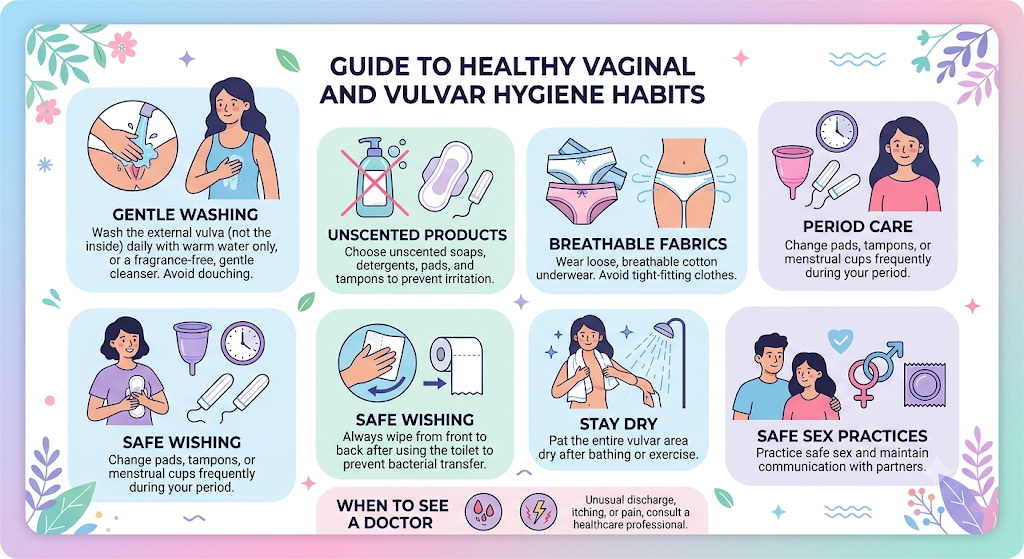
Daily Vaginal Hygiene Routine
A simple daily routine can help you maintain good intimate hygiene without overcomplicating your care.
Morning or Shower Routine
- Wash your hands before touching the genital area.
- Gently rinse the external vulvar area with water.
- If you use a cleanser, choose a mild, fragrance-free option that does not cause irritation.
- Do not wash inside the vagina.
- Pat the area dry with a clean, soft towel.
- Wear clean and comfortable underwear.
Vaginal Hygiene During Your Period
Your menstrual cycle can bring changes in moisture, discharge, and comfort. Good period hygiene focuses on keeping your routine clean, comfortable, and simple.
Helpful Period Hygiene Tips
- Change menstrual products according to the manufacturer’s instructions.
- Wash your hands before and after changing a product.
- Choose products without added fragrances if you experience irritation.
- Keep reusable menstrual products clean according to their care instructions.
- Change out of damp or soiled underwear promptly.
Menstrual blood is a normal part of the menstrual cycle and does not make the vagina “dirty.” There is no need to use douches or harsh internal cleansing products during your period.
(Also Read: Essential Sexual Hygiene Tips For Women After Sex)
Vaginal Hygiene in Hot and Humid Weather
Hot and humid conditions can increase sweating and moisture, which may make the genital area feel uncomfortable.
To stay comfortable:
- Wear loose and breathable clothing.
- Change out of sweaty clothes after exercise.
- Choose comfortable underwear.
- Dry the external area gently after bathing.
- Avoid using strong fragrances to mask normal body odor.

Common Vaginal Hygiene Myths
Myth: The vagina needs to smell like perfume.
Fact: A mild natural vaginal odor is normal. Perfumes and deodorants are not necessary for vaginal health.
Myth: Douching is necessary to stay clean.
Fact: The vagina naturally cleans itself. Douching can interfere with the natural vaginal environment.
Myth: More washing means better hygiene.
Fact: Excessive or harsh washing can irritate sensitive skin. Gentle external care is generally sufficient.
Myth: Every itch is caused by poor hygiene.
Fact: Vaginal or vulvar itching can have many causes, including infections, irritation, skin conditions, and hormonal changes.
Myth: A strong vaginal odor can always be solved with a hygiene product.
Fact: A persistent change in odor may be related to an infection or another condition. Covering it with fragrances does not treat the underlying cause.
(Also Read: Home Remedies For Itchy Vagina)
When Should You See a Doctor?
Good hygiene cannot prevent or treat every vaginal health problem. Contact a healthcare professional if you experience:
- Persistent or severe itching
- Burning or pain
- Unusual discharge
- A strong or persistent change in odor
- Pain during urination
- Sores, blisters, or significant skin changes
- Symptoms that keep returning
A healthcare professional can help determine whether your symptoms are caused by an infection, irritation, or another condition. Accurate diagnosis is important because different causes require different treatments.
Final Thoughts:
The most important rule of vaginal hygiene is to keep your routine simple and gentle. The vagina is naturally designed to maintain its own internal environment, so aggressive cleaning, douching, and heavily scented products are usually unnecessary.
Focus on gentle external care, breathable clothing, proper menstrual hygiene, and paying attention to changes in your normal symptoms. If you experience persistent itching, unusual discharge, pain, or a significant change in odor, seek advice from a qualified healthcare professional rather than trying to mask the symptoms with hygiene products.
FAQs:
Q. How often should I wash my vaginal area?
A. The external genital area can be gently cleaned as part of your regular bathing routine. Avoid excessive washing and do not wash inside the vagina.
Q. Should I use feminine wash every day?
A. A special feminine wash is not necessary for everyone. The vagina is self-cleaning, and harsh or fragranced products can cause irritation. If you use a cleanser on the external area, choose a gentle option that does not irritate your skin.
Q. Is vaginal odor normal?
A. A mild natural odor can be normal. However, a strong or noticeable change in odor, particularly with unusual discharge or irritation, may need medical evaluation.
Q. Can I use soap to clean my vagina?
A. You should not put soap inside the vagina. The external vulvar area can be cleaned gently, but harsh or heavily scented soaps may cause irritation.
Q. Why is douching bad for vaginal health?
A. Douching can disrupt the natural balance of microorganisms in the vagina and wash away protective bacteria. This may increase irritation or contribute to vaginal health problems.
Q. What kind of underwear is best for vaginal hygiene?
A. Comfortable, breathable underwear, including cotton or cotton-lined options, can help reduce trapped heat and moisture. Choose fabrics and clothing that do not cause irritation.
Q. Can poor hygiene cause vaginal infections?
A. Hygiene is only one part of vaginal health. Vaginal infections can occur for many reasons, including changes in the natural balance of microorganisms, hormonal changes, certain medications, and infections. Excessive hygiene practices, such as douching, can also disrupt the vaginal environment.

You May Also Like

First Period Hygiene Guide: ...
15 September 2026

Daily Hygiene Routine for Wo ...
15 August 2026
Vaginal Itching Causes: 10 C ...
30 July 2026
About Us

Hygiene means the way to stay healthy. It is not only important for physical but also mental health, because it directly affects your mind and brain.
Popular Post


Daily Hygiene Routine for Women: Complete Guide
15 August 2026
Leave a Comment