
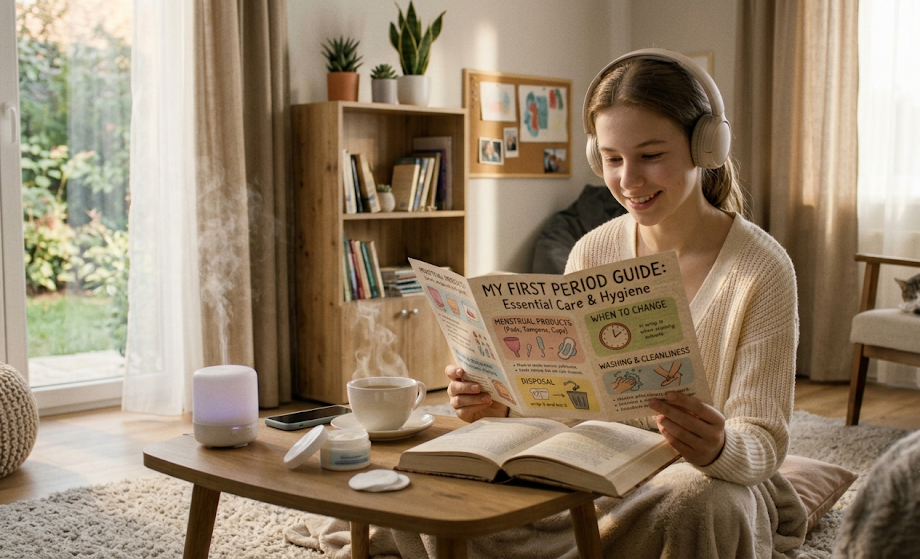
Getting your first period is an important milestone during puberty. It can bring excitement, questions, and sometimes a little nervousness. Knowing what to expect and understanding good menstrual hygiene can make the experience feel much easier and more comfortable.
This first period hygiene guide explains the basics of managing your first period, including how to choose and change menstrual products, maintain personal hygiene, deal with period stains, and understand when to ask a parent, trusted adult, or healthcare professional for help.
Every person’s experience with menstruation is different. Your first few periods may not follow a regular pattern, and the amount of bleeding can vary. Learning simple and healthy hygiene habits can help you feel prepared and confident.
Note: This article provides general educational information and is not a substitute for personal medical advice. If you have concerns about , speak with a parent, guardian, or qualified healthcare professional.
(Also Read: How Does The Menstruation Cycle Works?)
Table of Contents
What Is a First Period?
A period, also called menstruation, is a normal part of puberty for people who menstruate. During the menstrual cycle, the lining of the uterus builds up. When pregnancy does not occur, the body sheds this lining through the vagina as menstrual blood.
The first period is known as menarche. The age at which a first period begins can vary, and puberty develops differently for everyone. In the early years after periods begin, menstrual cycles may be irregular while the body continues to develop.
Having your first period is a normal biological process, and there is no need to feel embarrassed about it.
Why Is Menstrual Hygiene Important?
Good menstrual hygiene helps you stay comfortable and manage menstrual blood safely. It can also help prevent skin irritation caused by prolonged contact with moisture or a soiled menstrual product.
Healthy period hygiene habits include:
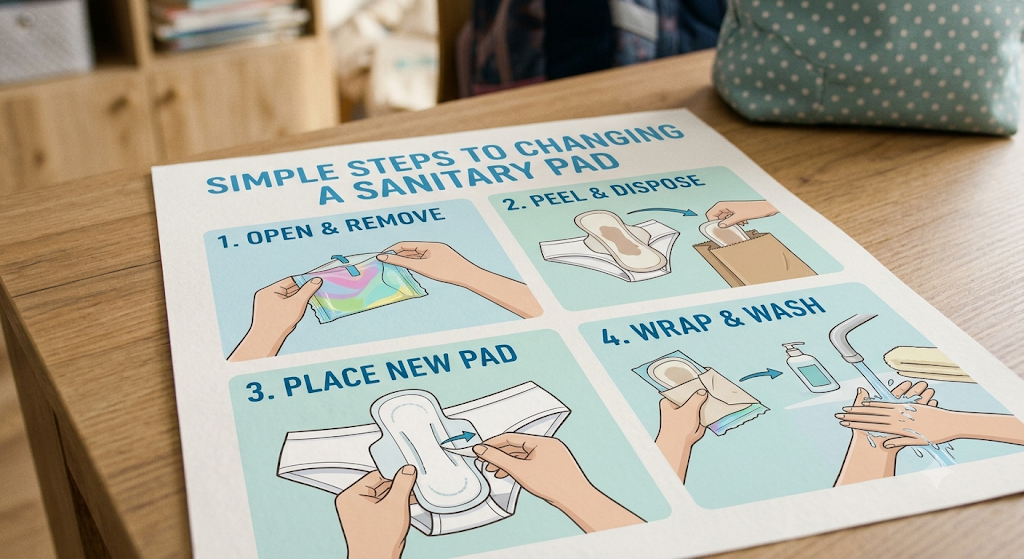
- Changing menstrual products regularly
- Washing your hands before and after changing a product
- Keeping the external genital area clean
- Wearing clean and comfortable underwear
- Disposing of menstrual products properly
Menstrual hygiene is about comfort, cleanliness, dignity, and understanding your body’s needs.
(Also Read: Keep Your Intimate Area Hygienic With V Wash)
First Period Hygiene Guide: Essential Tips for Beginners
1. Choose a Menstrual Product That Feels Comfortable:
There are several menstrual products available, including:
- Sanitary pads
- Tampons
- Menstrual cups
- Period underwear
For someone experiencing a first period, pads are often a simple option because they are worn outside the body and are easy to understand. However, the best choice depends on personal comfort, access, cultural preferences, and individual needs.
How to Choose a Pad
Pads come in different sizes and absorbencies. When starting out, choose a product that feels comfortable and provides enough absorbency for your menstrual flow.
You may want to keep different types available, such as:
- Regular pads for daytime use
- Longer or more absorbent pads for heavier flow or overnight use
Follow the instructions provided by the product manufacturer.
2. Change Your Pad Regularly
Changing menstrual products regularly is an important part of first period hygiene. A pad should be changed when it becomes wet or full, and according to the product instructions.
Avoid wearing the same pad for an extended period, even if your flow is light. Regular changing can help prevent discomfort, odor, and skin irritation.
If you use a tampon, follow the manufacturer’s instructions carefully and use the lowest absorbency suitable for your flow. Tampons should not be left in longer than the time recommended on the product label.
3. Wash Your Hands Before and After Changing Menstrual Products
Hands can carry dirt and germs from everyday surfaces. Washing your hands before changing a menstrual product helps keep your hands clean while handling it.
Wash your hands again afterward, especially before returning to school, eating, or touching other objects.
Use soap and clean running water when available. Proper handwashing is a simple habit that supports overall personal hygiene.
4. Keep the External Intimate Area Clean
During your period, you do not need special or strongly scented products to stay clean.
Gently wash the external genital area, also called the vulva, during your normal bathing routine. Plain water is usually enough for many people. If you use a cleanser, choose a gentle product intended for external use and avoid products that cause irritation.
The vagina cleans itself naturally. Avoid putting soaps, fragrances, or cleansing products inside the vagina.
Avoid Douching
Douching means washing or rinsing inside the vagina. It is not necessary for menstrual hygiene and may disturb the natural vaginal environment.
A natural menstrual odor is normal, but a strong or unusual odor, accompanied by itching, burning, or unusual discharge, should be discussed with a healthcare professional.
5. Wear Clean and Comfortable Underwear
Comfortable underwear can help you feel more secure during your period. Choose clean underwear that fits well and allows you to move comfortably.
Some people prefer breathable fabrics, particularly during hot or humid weather.
If you experience a leak, change into clean underwear and clothing as soon as possible. Keeping an extra pair in your school bag or period kit can help you feel prepared.
6. Learn How to Dispose of Pads Properly
Disposable pads should be wrapped and placed in a suitable waste bin according to local disposal guidelines.
Do not flush pads down the toilet, as they can block plumbing and create environmental problems.
If you are at school or another public place, look for a sanitary disposal bin. If one is not available, wrap the used pad securely and dispose of it in an appropriate waste bin.
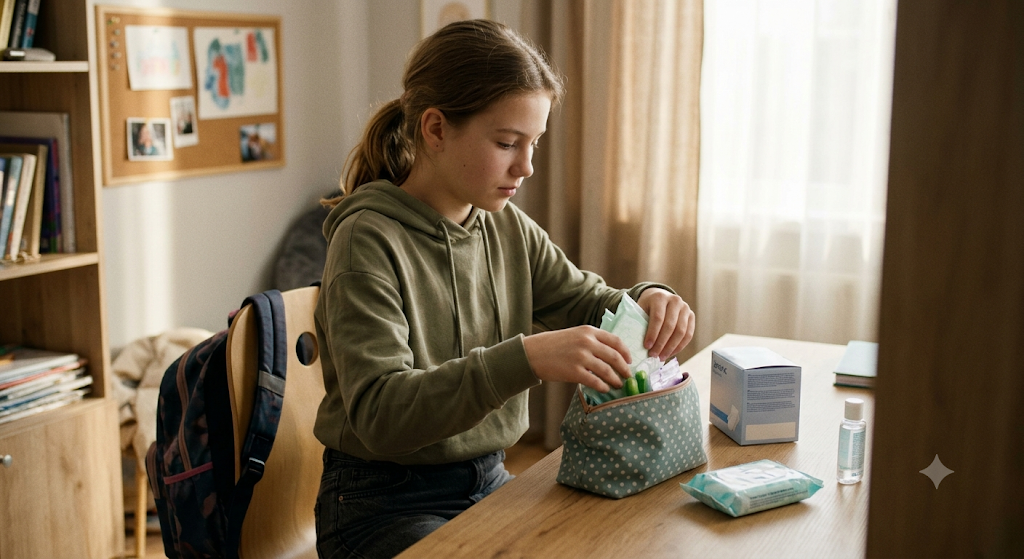
7. Prepare a First Period Emergency Kit
Having a small period kit can make you feel more prepared when you are away from home.
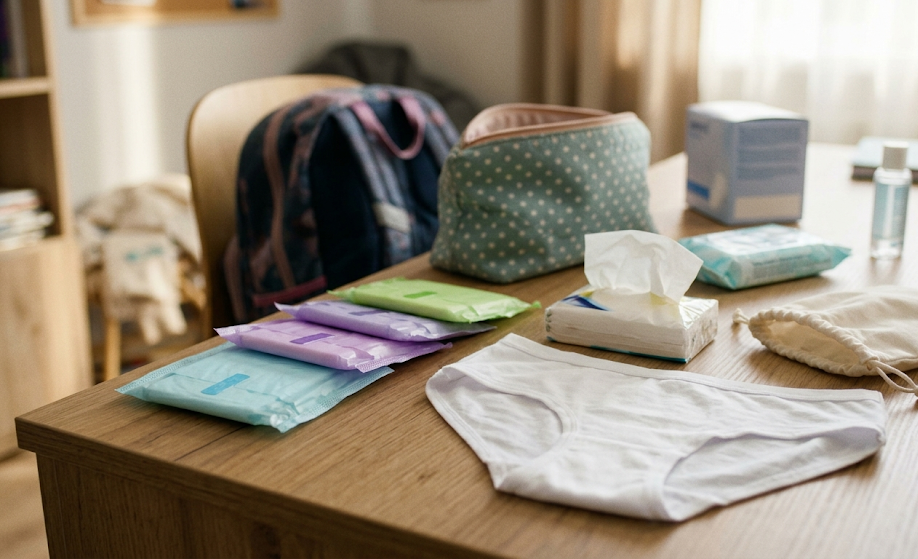
A basic kit might include:
- A few sanitary pads
- A spare pair of underwear
- Toilet paper or tissues
- A small reusable pouch
- Hand sanitizer for situations where soap and water are not immediately available
You may also want to keep a small bag for carrying a used product temporarily until you can find an appropriate disposal bin.
8. Know How to Handle Period Stains
Period leaks can happen to anyone, especially while learning about your menstrual flow. There is no reason to feel embarrassed.
If you notice a stain:
- Change your menstrual product.
- Change into clean underwear or clothing if available.
- Rinse the stained fabric with cool water as soon as possible.
- Wash the clothing according to its care instructions.
Keeping a sweater, scarf, or spare clothing in your bag can provide extra peace of mind.
9. Track Your Period
Tracking your period can help you understand your menstrual cycle.
You can use:
- A calendar
- A notebook
- A period-tracking app
Record the first day of bleeding and note approximately how long your period lasts. During the first few years, periods may be irregular, so tracking can help you notice your own pattern over time.
If you have concerns about very heavy bleeding, severe pain, or other unusual symptoms, discuss them with a trusted adult or healthcare professional.
10. Take Care of Your Body During Your Period
Your period is a normal part of life, and basic self-care can help you feel more comfortable.
During your period, try to:
- Get enough rest
- Drink fluids regularly
- Eat regular, balanced meals
- Continue gentle physical activity if you feel comfortable
- Use appropriate comfort measures for mild cramps
Some people experience cramps or other symptoms during their period. If pain is severe, interferes with everyday activities, or concerns you, seek advice from a healthcare professional.
(Also Read: How To Use Period Panty?)
A Simple First Period Hygiene Routine
The following routine can help make menstrual hygiene easier:
| Time | Hygiene habit |
|---|---|
| Morning | Check your menstrual product and change it if needed |
| During the day | Change your product as needed and according to the instructions |
| Before and after changing products | Wash your hands |
| During bathing | Gently clean the external genital area |
| After sports or sweating | Change into clean, dry clothing if needed |
| Before bed | Use an appropriate menstrual product and change into clean underwear if necessary |
Your routine may change depending on your menstrual flow, daily activities, and the type of product you use.
(Also Read: Myths About Tampons: How To Use Tampons And It’s )
Common First Period Hygiene Mistakes to Avoid
Learning about periods takes time. Here are a few common mistakes that can be avoided with the right information.
Waiting Too Long to Change a Menstrual Product
A product should be changed regularly according to your flow and the manufacturer’s instructions. If it feels wet, uncomfortable, or full, it is time to change it.
Using Strongly Scented Products to Hide Odor
Perfumed sprays, scented washes, and other fragranced products can irritate sensitive skin. They may mask a smell temporarily but do not address the cause of unusual symptoms.
Not Washing Your Hands
Handwashing before and after changing a menstrual product is a simple but important hygiene habit.
Feeling Ashamed About Asking for Help
Periods are a normal part of development. It is okay to ask a parent, guardian, school nurse, teacher, or another trusted adult for help or information.
Flushing Pads or Other Non-Flushable Products
Disposable menstrual products should be disposed of according to their instructions and local waste guidelines rather than flushed down the toilet.
(Also Read: Menstruation And Hygiene! How To Maintain)
What Should You Expect During Your First Few Periods?
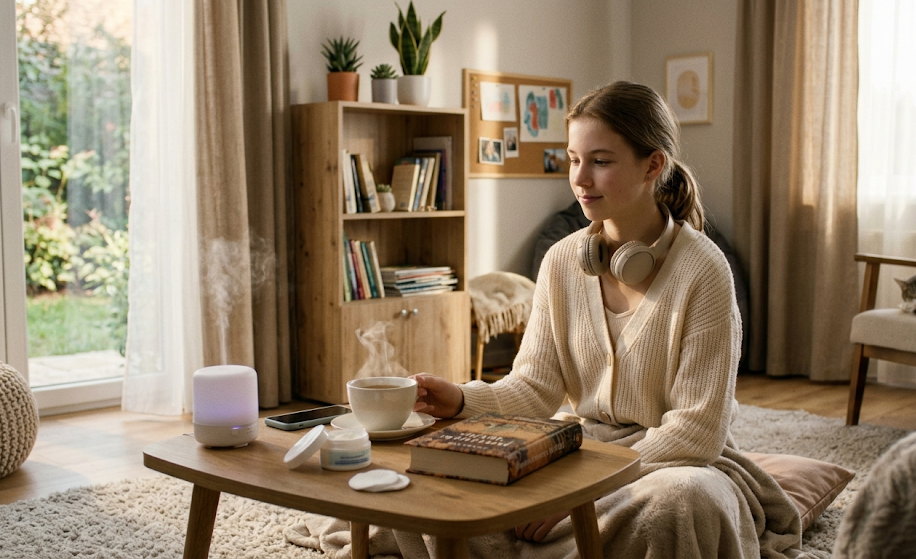
The first few periods may be different from what you expected. They may be:
- Light or moderately heavy
- Shorter or longer than later periods
- Irregular
- Accompanied by mild cramps or no cramps at all
Your body may take time to establish a more regular pattern. However, everyone is different, and you should speak with a healthcare professional if you are concerned about your symptoms.
When Should You Ask a Doctor About Your Period?
It is a good idea to seek medical advice if you have concerns such as:
- Very heavy menstrual bleeding
- Severe or worsening pain
- Feeling faint or unusually weak
- A strong, persistent, unusual odor with other symptoms
- Significant itching, burning, or unusual discharge
- Symptoms that interfere with school, sleep, or everyday activities
A parent, guardian, or another trusted adult can help you access appropriate medical care.
Final Thoughts:
Your first period is a new experience, and it is completely normal to have questions. This first period hygiene guide can help you develop simple habits that keep you comfortable and prepared.
Change menstrual products regularly, wash your hands, wear clean underwear, and gently care for the external intimate area. Remember that periods are a normal part of growing up, and there is no need to feel embarrassed about asking questions or seeking help.
With the right information and a simple routine, managing your first period can become a normal and confident part of everyday life.
FAQs:
Q. How often should I change my pad during my period?
A. Change your pad regularly based on your flow and the product instructions. If the pad feels wet, full, or uncomfortable, change it. Regular changes can help prevent discomfort and skin irritation.
Q. Should I wash my intimate area every time I change a pad?
A. You do not need to wash the vaginal area every time you change a pad. Regular bathing and gentle cleaning of the external genital area are generally enough. Avoid washing inside the vagina.
Q. Is it normal to have an odor during my period?
A. Menstrual blood can have a mild natural odor. However, a strong, persistent, or unusual smell—especially with itching, burning, pain, or unusual discharge — should be discussed with a healthcare professional.
Q. What should I do if I get my first period at school?
A. If you get your period at school, ask a trusted teacher, school nurse, or another staff member for help if needed. Many schools have menstrual products available. If possible, keep a small period kit in your school bag for future use.
Q. Can I play sports during my period?
A. Yes. Many people continue normal physical activities during their period. Choose a menstrual product that feels comfortable for your activity and change it as needed.
Q. What should I keep in a first period emergency kit?
A. A basic kit can include pads, spare underwear, tissues, and a small pouch. You can add other items based on your personal needs.
Q. Should I use scented pads or intimate washes?
A. If scented products cause irritation or discomfort, stop using them. Strong fragrances are not necessary for good menstrual hygiene. Gentle external care is usually a better approach.
Q. Are irregular periods normal after your first period?
A. Menstrual cycles can be irregular during the first years after periods begin. If you are worried about your period pattern or symptoms, speak with a healthcare professional.

You May Also Like
Daily Hygiene Routine for Wo ...
15 August 2026
Effective Ayurveda Remedies ...
15 March 2025
Miscarriage In First Month S ...
15 August 2024
About Us

Hygiene means the way to stay healthy. It is not only important for physical but also mental health, because it directly affects your mind and brain.
Popular Post


Daily Hygiene Routine for Women: Complete Guide
15 August 2026
Leave a Comment